About six months ago, my partner Josh and I were out at a local Farmer’s Market in southern Alabama. We wandered over to a wall of mason jars filled with pickled okra, pepper jam, and every kind of pickled vegetable. Josh picked up a jar of red onions and told me how much he loved them.
It didn’t take long for me to see how much he liked them because as soon as we got home, fingers were already fishing the red onions out of the jar. They went from jar to mouth, no need for a sandwich or other vehicle to deliver them to the body. He ate them straight.
After he finished the jar (no, not the same day, thankfully), we talked about going back to the market. I told him that pickled red onions were incredibly easy to make – especially if you quick pickle them. No need to spend 5 dollars to get more.
To show how easy it was, I brought an onion over to his apartment and some vinegar. I thinly sliced the onion and packed it into a mason jar. I brought equal parts water and vinegar to boil and added a little sugar. After it came to a full boil, I poured the mixture over the onions and closed the jar. After a couple days, the jar turned deep purple and bam! pickled red onions.
About 3 or 4 jars later, I told Josh about the old fashion way to pickle. Traditionally, pickles were made in a salt brine. The brine fermented the pickles with bacteria (lactobacillus). Then the bacteria kicked out acetic acid. The acid gave the pickles a sharp tangy flavor.
Modern day pickling is usually done by heating vinegar and water and pouring it over a vegetable. The heat from the boiling liquid softens the vegetables and the vinegar adds the tang.
Both are useful in their own ways. Lactofermented vegetables take longer than quick pickles (vinegar and heat). But lactofermented vegetables have more flavor.
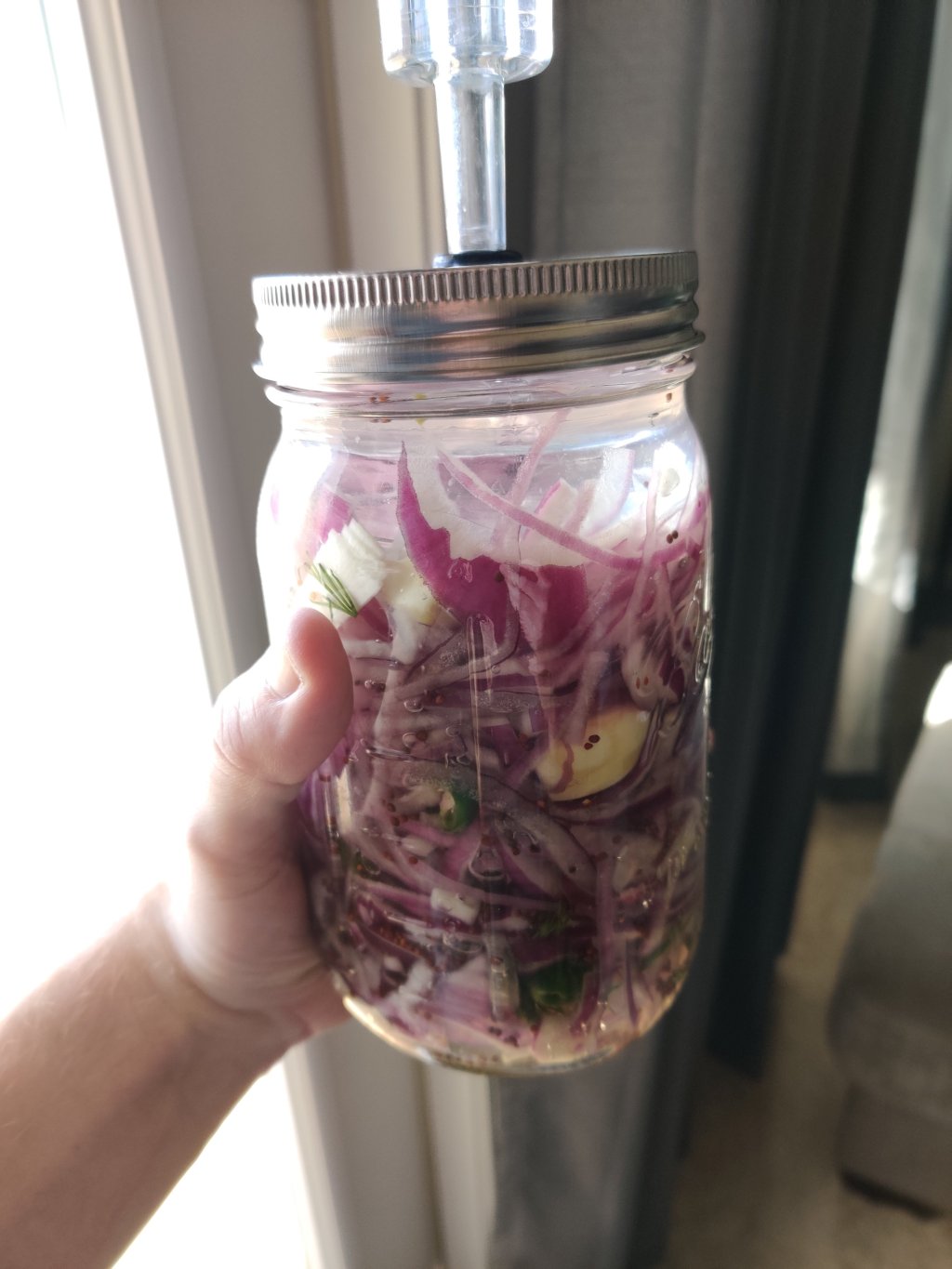
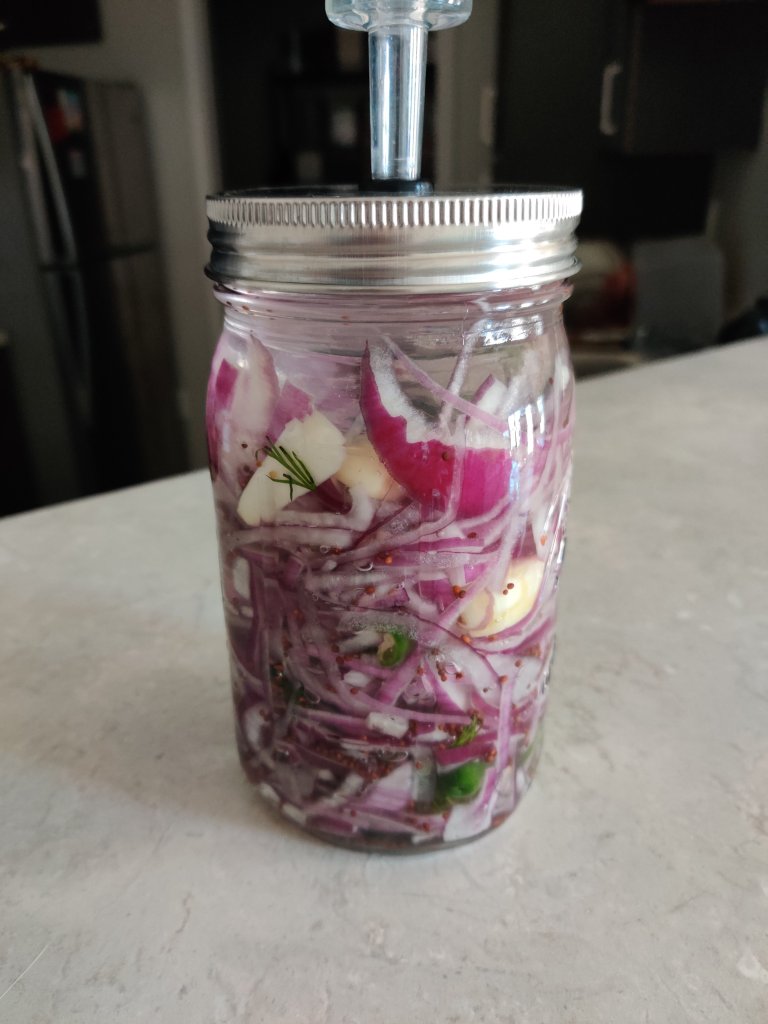
Today, I decided to make him a batch. I thinly sliced two red onions and combined them with four whole garlic cloves, some fresh dill, some brown mustard seeds, and two serrano peppers. After everything was prepared, I stuffed it in a mason jar and filled it with tap water. I weighed it and created a 2% salt brine. With an air-lock, the red onions should be done in a week.
We’ll see how the flavor combination works. Will the serrano peppers be too much? Do dill and mustard seeds go together? We’ll see! Results to come out next week!


 Three Siblings Kitchen (TSK)
Leave a comment