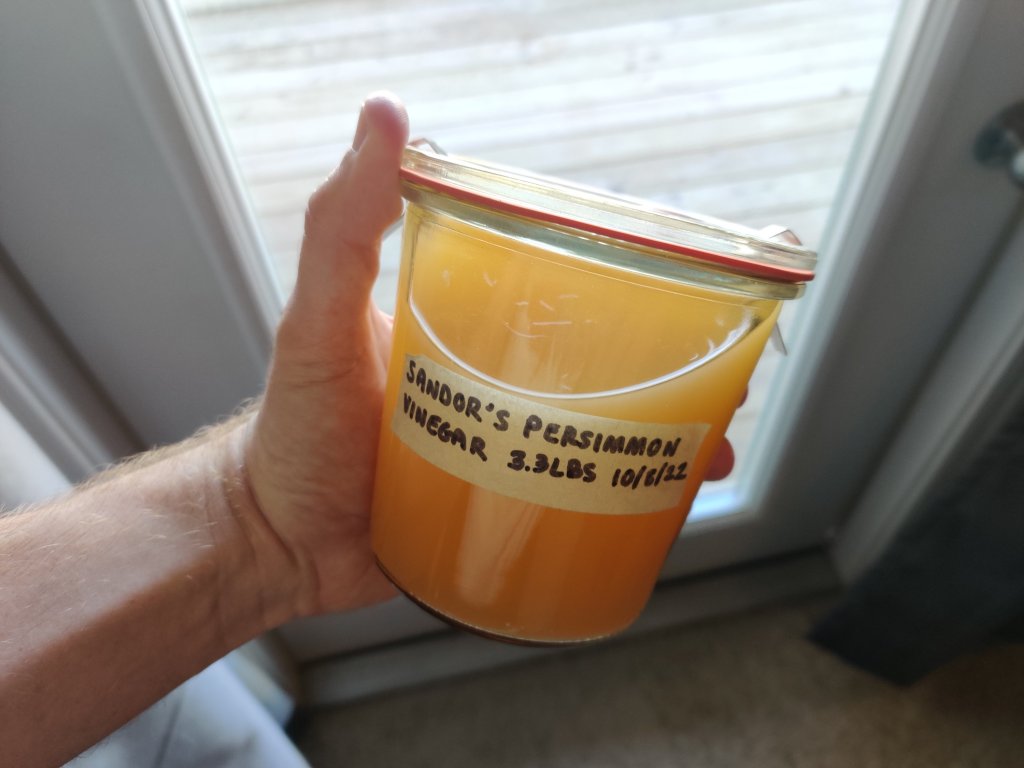
Last fall, I waited for the persimmons to ripen in Pensacola. There’s a hidden joy in discovering new foods. In all the places I’ve lived, I’ve never encountered persimmons. They’re an odd fruit. When picked, they’re hard as a rock. After a few days, they soften like a peach.
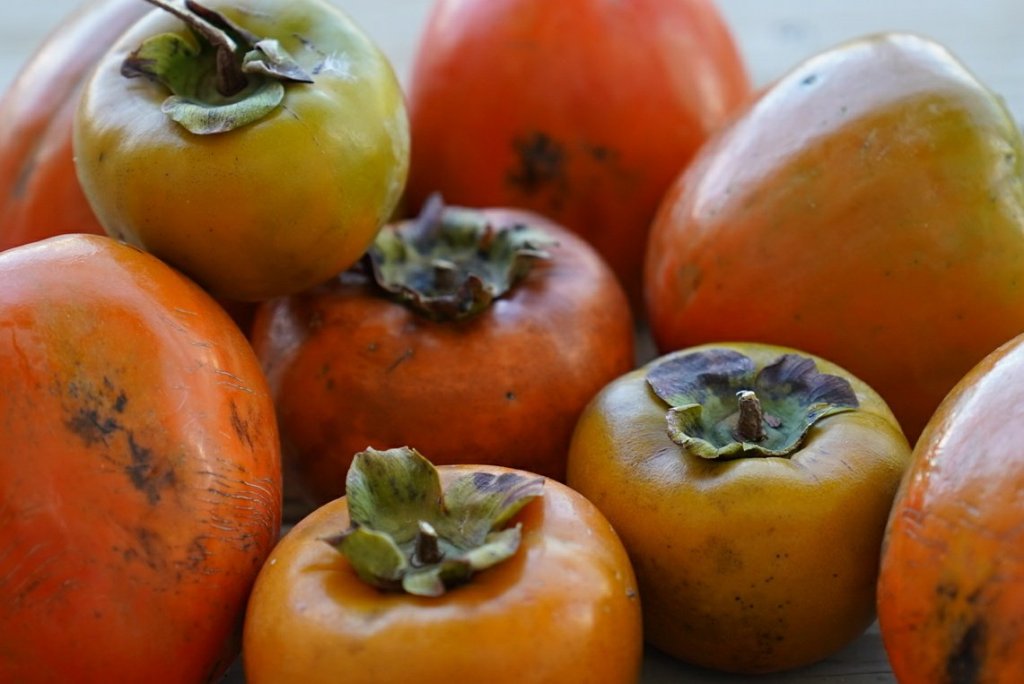
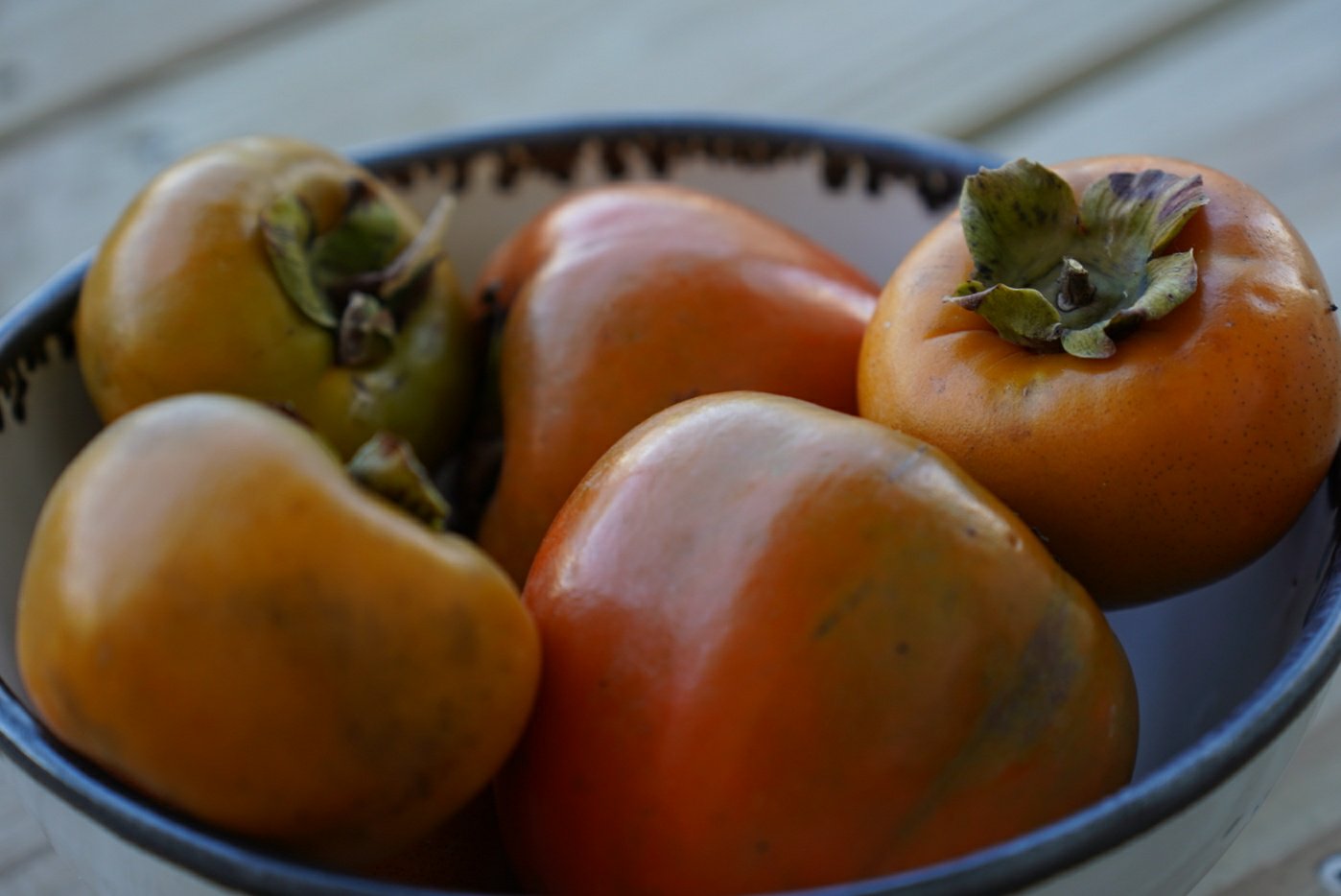
There are two varieties that we have available here: American and hachiya. The American persimmons are flatter in generally and look like an orange tomato. The hachiya are larger and more astringent.
Most of the people I encounter prefer the American variety because they are less astringent and you can eat them when they’re harder. I prefer the hachiya because I like their softness and the thinness of their skin.
Naturally, as a self-described food-experimentalist, I wanted to try to preserve persimmons through a form of fermentation. Sandor Katz’s most recent book “Fermentation Journeys” has a recipe for persimmon vinegar.
Typically, when fermenting, techniques call for creating environments conducive towards a particular bacteria. Usually their are protective measures for preventing unwanted bacteria or molds. For example, when making lactoferments, recipes typical call for the pickles to be submerged in a salt-brine to create an anaerobic environment.
To make vinegar, the process is three fold. Start with a sugary product, expose it to yeast to produce alcohol, then expose it to acetobactor to convert the alcohol to acetic acid (vinegar).
During the sugar-to-alcohol conversion, recipes usually call for an anaerobic environment. This helps prevent molds from forming on the surface of the food.
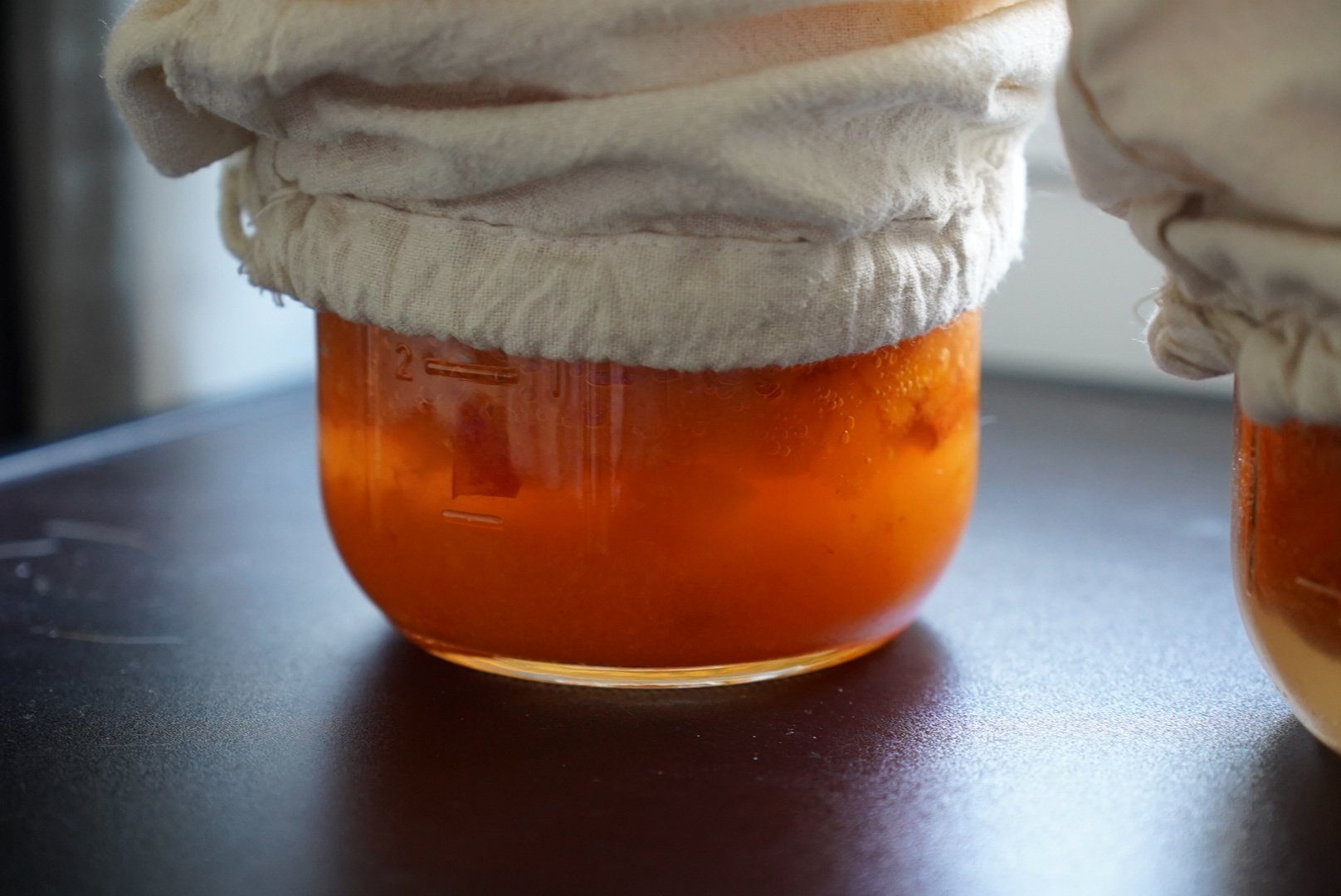
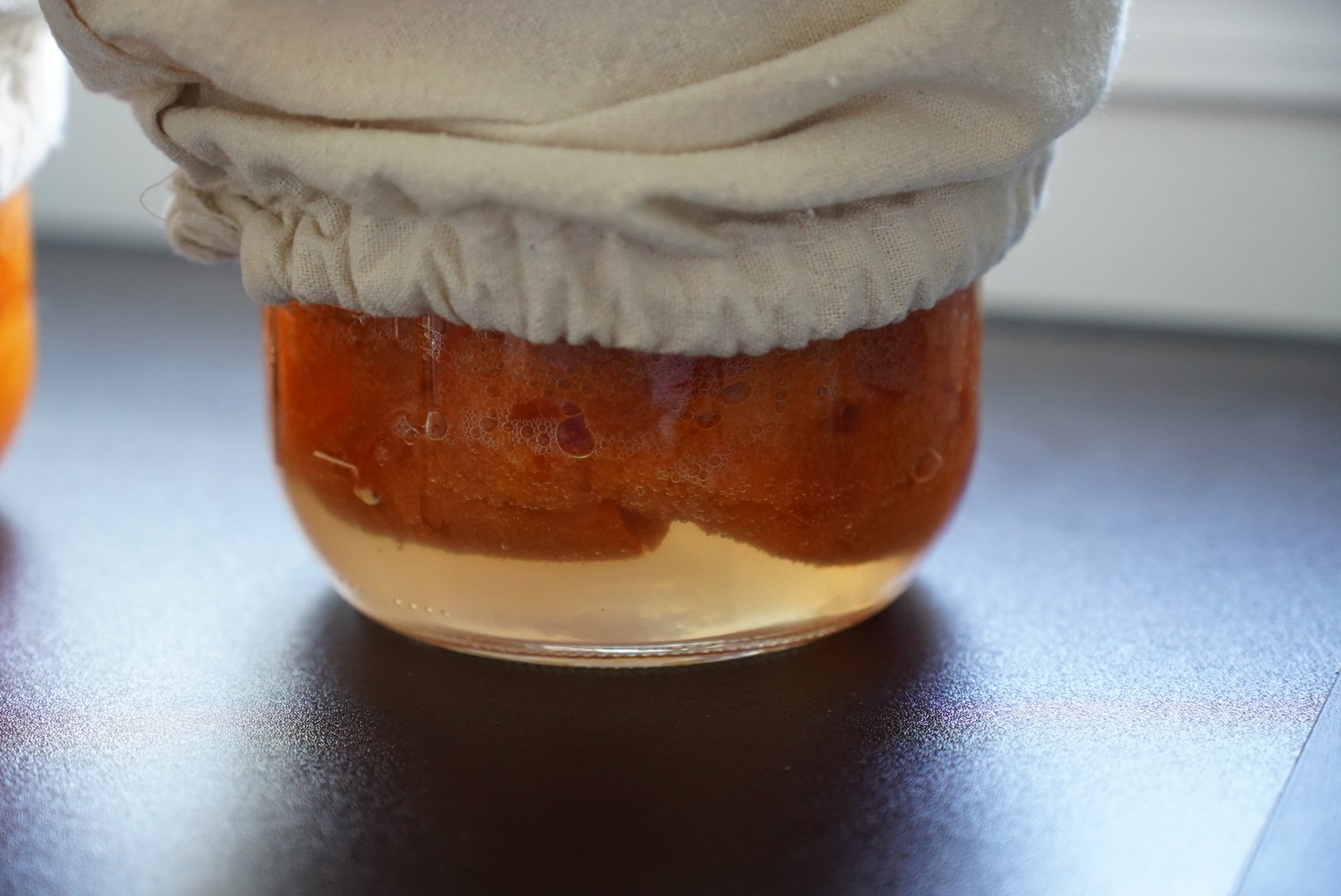
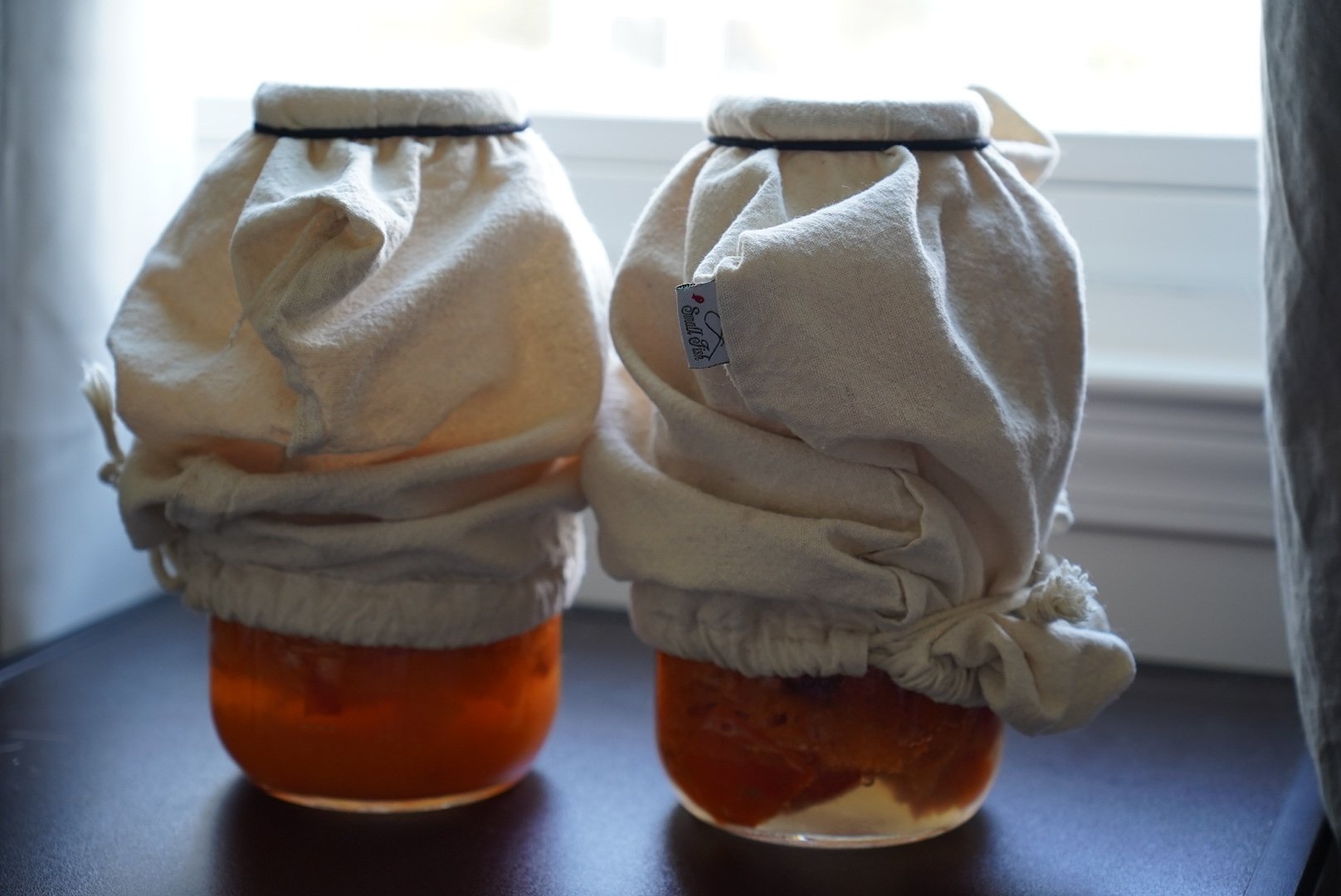
Sandor’s recipe is incredibly simple; chop semi-ripe persimmons into cubes, put them in an open jar, cover the jar with cheesecloth. Stir daily.
The persimmons soften into a thick juice in the first few days. Then wild yeast on the skin of the persimmons and in the air start to consume the sugars in the persimmons.
The pulp floats to the top and the bottom of the jar will separate into a semi-clear juice. The daily stirring reintegrates the pulp and prevents mold from forming.
After a few days, the mixture will bubble and smell alcoholic. After a week or two, it begins to smell and taste sour.
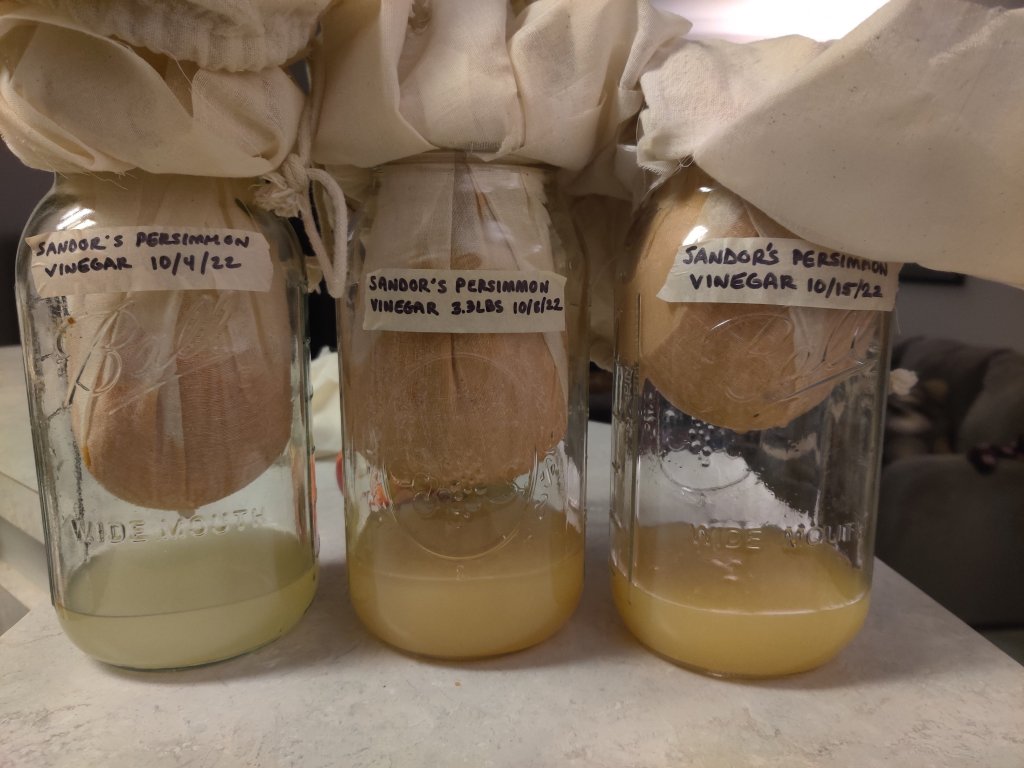
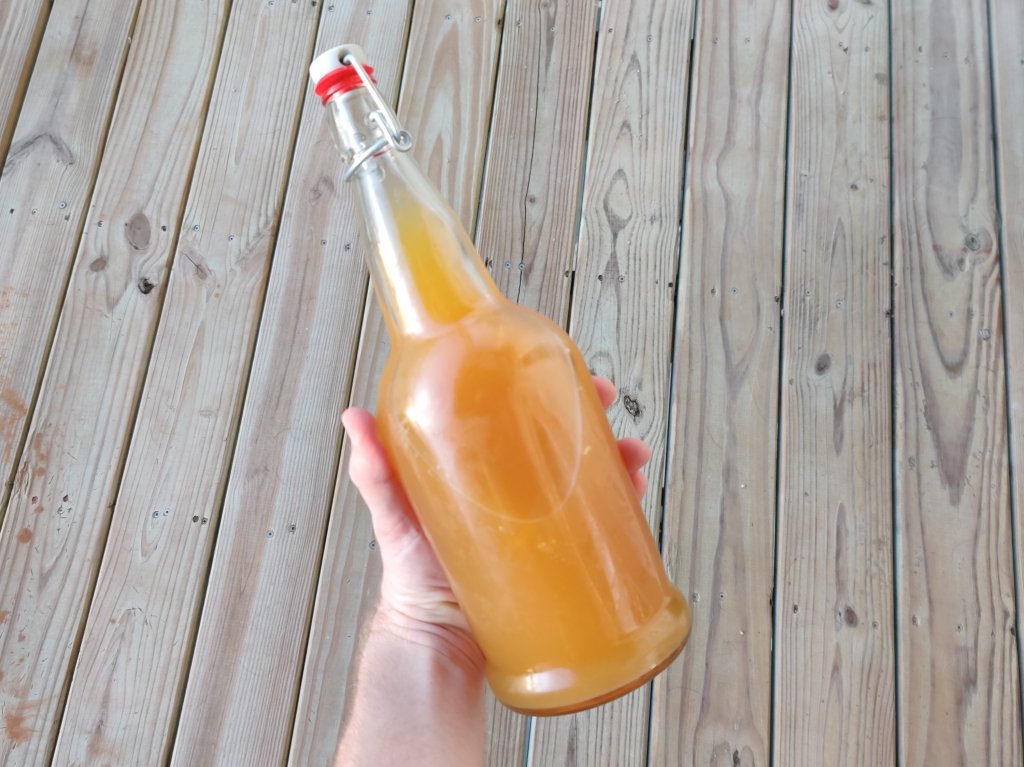
After a few months, the vinegar is ready to harvest. Strain the mixture through cheesecloth and pour into bottles. The pulp can (and should) be reserved for making tsukemono. I’ll elaborate in a future post.
Honestly, this was one of the most enjoyable ferments I’ve made. It was incredibly simple and challenged the way I thought about food. Vinegar on the store shelves feels foreign and how it’s made is a mystery. When you make homemade ferments, the mystery evaporate and is replaced with an intimacy with the food.
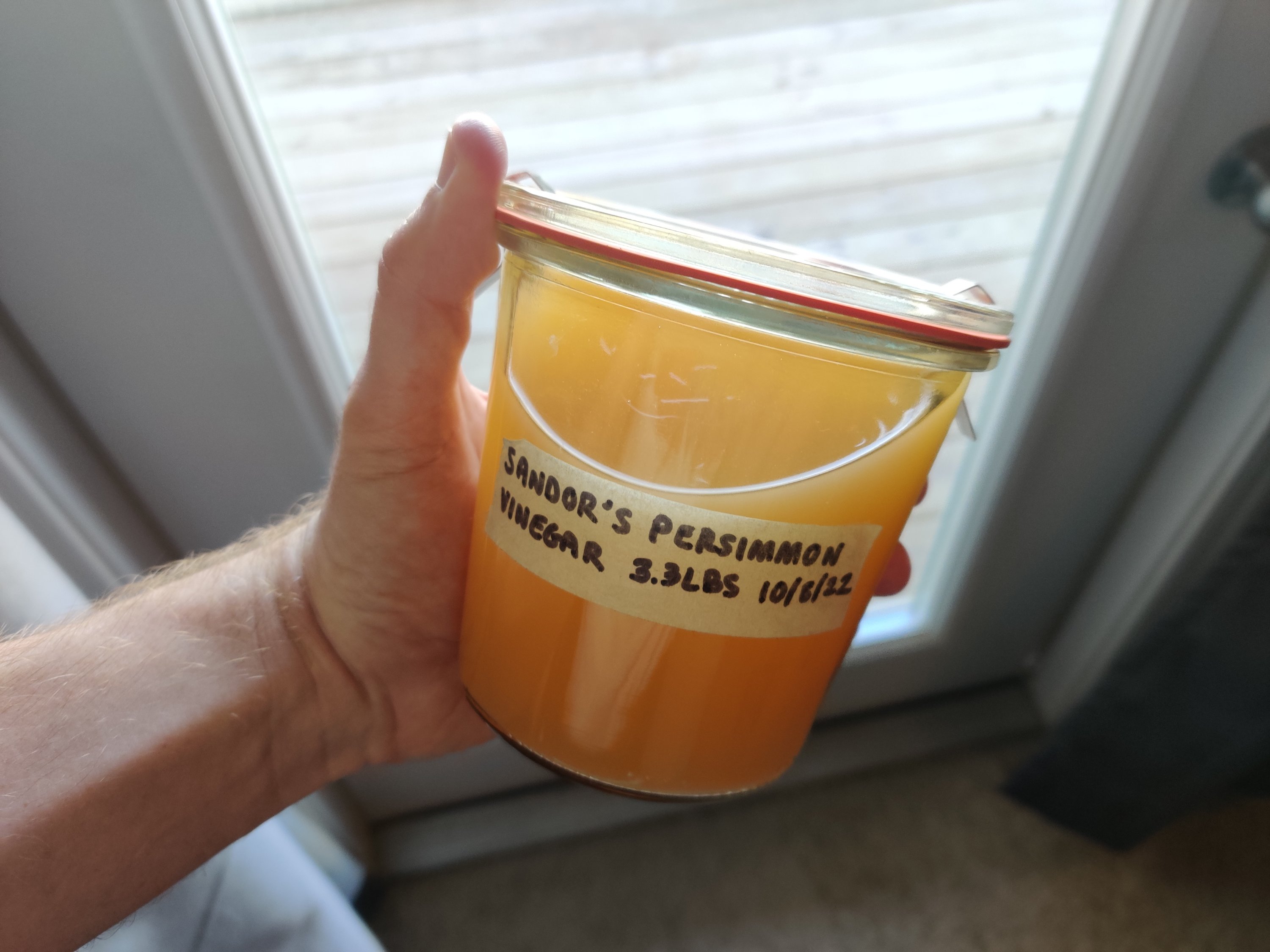
A friend named Annie gave me her spare persimmons to try to make vinegar. After I bottled everything, I gave great a large container of the finished product. If you have access to persimmons, I would recommend trying out Sandor’s “recipe” and giving it a go!




 Three Siblings Kitchen (TSK)
Leave a comment